Monday, 6 July 2026

The Purple Party Paradox

Let’s imagine a new Canadian party. They pick purple as their colour because they are a perfect blend of red progressive human rights and blue conservative economic stability. Their platform has four pillars: cost of living relief, housing, healthcare, responsible immigration, and energy security with environmental stewardship. Each pillar balances compassion with fiscal responsibility.

Now let’s imagine that the Purple Party is second-past-the-post in each of Canada’s 343 ridings. How many seats would they win in the House of Commons? Zero. Yes, zero!


Map of Canada Public Domain/Horse Image by Mohamed Hassan from Pixabay

 Even though they won more of the popular vote, as the Conservatives did in 2019 and 2021, it could still be shut out of Parliament entirely. That's the fundamental flaw of first-past-the-post—millions of votes can result in zero representation.

Electoral reform with proportional representation would solve this unfairness. If the Purple Party won 35% of the vote, they would win 35% of the seats. Imagine knowing that your vote would count, help elect someone, never be wasted or split the vote, and make every riding matter in every election.

Unlike Canada, most OECD countries use proportional or mixed electoral systems. When votes are translated into seats, you are more likely to believe your voice matters. That belief builds trust in democracy. Trust creates a stronger sense of belonging, where you feel less ignored or shut out. A democracy you trust is more likely to stay united.

Support electoral reform with PR. Visit FairVote.ca or CharterChallenge.ca to learn how.

35% votes = 35% seats—simple math, fair representation

Tuesday, 9 June 2026

The Real Math of Representation

What did you think about the unusual wave of floor crossings? In the aftermath of Conservative MP Gladu’s floor crossing, Prime Minister Mark Carney said, "If you really want to unite the country, you want people with lots of different views." This applies most clearly to elections, when diversity within a party is built transparently. After elections, when diversity is gained through defections, it can raise questions about legitimacy.

When someone crosses the floor, it blurs the connection between how people voted and who governs. That dynamic is sharper under first-past-the-post, where even a small shift can have outsized effects on power. This strengthens the case for proportional representation (PR), where seats reflect how people actually voted. Similar shifts would be less likely to dramatically alter who governs because power is usually shared among multiple parties and coalition agreements.

Image created by ChatGPT 9-Jun-2026

While majority governments elected with less than majority support may “get things done,” the policy lurch that follows can undo those gains and create uncertainty. GPC Leader Elizabeth May points instead to Lester B. Pearson’s minority governments, which worked closely with Tommy Douglas and the NDP to help deliver Medicare, the Canada Pension Plan, and major expansions of social programs.

Canadians cast ballots for representation, not surprises. PR would make sure the democratic math still adds up after election day.

Support electoral reform with PR. Visit FairVote.ca or CharterChallenge.ca to learn how.

35% votes = 35% seats—simple math, fair representation

Monday, 27 April 2026

If Anyone Builds It, Everyone Dies

Do you remember when Google’s code of conduct included “Don’t be evil”? Let’s define evil as intentionally causing harm. Social media platforms did not set out to cause harm. Yet their algorithms optimize for profit by amplifying negative emotions, with no awareness of the harm they cause to individuals and democracy.

That gap between intent and outcome reflects how these systems are built. They are trained. Training an AI model is less like writing code and more like shaping a developing brain. Algorithms guide how connections change with experience. Even if we could map every one of those connections, we still couldn’t reliably predict what the system will do. Artificial superintelligence (ASI) would be trained the same way and it would be beyond our ability to fully predict or control.

Concerned AI experts and others warn that mitigating extinction risk from ASI should be a global priority alongside pandemics and nuclear war. This sounds like science fiction. But imagine a Mayan warrior watching Spanish ships approach, unable to conceive that the men aboard had technology that could kill at a distance. Even without a physical form, ASI could exert real-world influence by exploiting the interconnected technologies we already depend on. We will be the Mayan warriors, outgunned before we even understand why.


Modified images by Niran Kasri/OpenClipart-Vectors from Pixabay

The authors of If Anyone Builds It, Everyone Dies say many leaders see the danger but stay silent. When we speak up, we give them the mandate to act. Tell leaders to act now to build treaties and prevent any ASI.  

Monday, 6 April 2026

The Boulder Kids Can’t Dodge

Are you familiar with the song line, “If it wasn’t for bad luck, I wouldn’t have no luck at all”? It is very applicable to the Saskatchewan Child Poverty Report Card 2026 by Simon Enoch (PhD), a Senior Researcher with the Canadian Centre for Policy Alternatives (CCPA) in Saskatchewan. Before diving into the report, let’s build an analogy for child poverty using a boulder dropped in a stream.

Author Ed Smith explains that an early critical chance event in your life is like a boulder that diverts the course of your stream, changing it forever. Child poverty is a proven cumulative disadvantage: each effect builds on the last, narrowing the channels of possibility at every stage.


Image by N Carswell from yayang art and OpenClipart-Vectors from Pixabay 

Let’s follow the childhood poverty stream path over time. As an infant, limited access to nutrition, healthcare, and stimulation can restrict physical and cognitive development. In early childhood, this shows up as lower school readiness and weaker academic performance. As the child grows, openings to engage in holistic growth activities like sports or the arts are limited. In adolescence, growing up in under-resourced environments can heighten stress and feelings of insecurity, while also limiting access to supportive social connections that are vital for coping, learning, and emotional growth. By adulthood, the stream has narrowed further with lower educational attainment limiting access to stable, well-paying work.

Without intervention, the constricted stream of opportunity carved by child poverty threatens to shape not only one life but the course of the next generation as well. Enoch’s Saskatchewan Child Poverty Report Card 2026 gives the Saskatchewan government a failing grade. Here are some grim Saskatchewan poverty statistics:​

·     Children living in poverty 27.1% with children under six 30.39%

·     Children in northern regions over 60%

·     Lone-parent families 49.4%

The report explains how government transfers combat poverty and urges the Saskatchewan government to prioritize anti-poverty strategies to prevent long-term harm to children. These include:

·        Use rent caps to prevent sudden increases in housing costs.

·        Create a Saskatchewan child benefit to supplement federal support. ​

·        Ensure social assistance benefits covers basic utilities and are indexed to inflation

·        Increase the minimum wage

·        Boost provincial transfers, including tax credits and sales tax rebates. ​

·        Continue commitment for universal affordable childcare

Let’s start working upstream and make sure that no bad luck boulders of poverty divert children’s lives. Ultimately, their bad luck is bad luck for all of us.

(This is longer than a 250 word letter to the editor.)

Sunday, 22 March 2026

The Canadian Wealth Chasm in 30,000 Seats

Have you lived a million seconds? Most likely if you are reading this as you pass a million (M) seconds during your 12th day. You have lived a billion (B) seconds if you have lived 32 years—yes, years. We can do the math, but it is hard to grasp the magnitude of big numbers. The Oxfam report The Rise of the Super-Rich: The State of Inequality in Canada uses big numbers. To make these numbers tangible, let us look at using a 30,000-seat stadium.

Stadium field comparing super rich, rich, and average.
Graphic by N Carswell

In this stadium, the 1% wealthiest Canadians, each with a net worth of around $7M, take up 300 seats. The 40% of Canadians with an average net worth of just under $87,000 occupy 12,000 seats. Move the 300 wealthy onto the field, which is 100 metres long and 60 metres wide, or 6,000 square metres (m2). They hold 25% of Canada’s wealth, giving each person about 5 m2, roughly the size of a walk-in closet. You could picture them standing with room to stretch and walk around.

Now try fitting the 12,000 people from the bottom 40% onto the same field. They hold only 3% of the wealth, 180 m2 in total. That is just the space of a hand spread out for each person. Even if six people squeezed into a square metre, m
ost would still have to stay in the stands, barely touching the field.

The top 0.01%, only 3 people in our stadium, occupy 3 seats but hold 5% of the wealth. On the field, they would each have 100 m2, about the size of a large apartment.

As the report emphasizes, the inequality gap in Canada has become a “wide, expansive, echoing wealth chasm.” Out of the 30,000 people in our stadium, over 3,000 are living in poverty, and 7,500 are food insecure. This divide is not just numbers. It erodes trust in institutions, weakens democracy, and deepens political polarization, leaving many Canadians feeling excluded from decisions that affect their lives. A few rich people control the media, leaving many voices unheard and making inequality worse.

But inequality is not inevitable.

Canada and Saskatchewan could take decisive steps to close this gap. The report recommends a progressive wealth tax on fortunes over $10M, closing offshore tax loopholes, and supporting international efforts to curb tax avoidance. These steps could raise billions for healthcare, affordable housing, and child care making the economy fairer and giving more of us a chance to thrive.

Inequality is not just a statistic, it affects everyone every day. You can make a difference. Contact your MP and/or MLA and tell them that Canada needs fairer policies now. Speak up, demand action, and help turn these numbers into a future that works for everyone. 

(This is longer than a 250 word letter to the editor.)

Sunday, 8 March 2026

Vote and Voice

At an elementary school event, I witnessed a great example of nurturing parenting. The parent announced it was time to go. One child protested and pleaded. The parent listened attentively and responded to the child’s words while playfully herding their two children to the door. The parent’s listening was not a surrender of authority, but a way of guiding the child through frustration. Nurturing parenting often means giving a child a voice, but not a vote.

Our first-past-the-post electoral system offers an opposite example. Even when your vote helps elect an MP, that MP often has no voice. As Andrew Coyne explains in The Crisis in Canadian Democracy, MPs historically used their voices to “consider, refine and pass” legislation. Increasingly, they are whipped by party discipline (and/or personal ambition) to keep their party in power. Omnibus bills and truncated debate times further muzzle our MPs, reducing Parliamentary voting to a rubber stamp.

Proportional representation (PR) would change this dynamic. Coyne also explains how PR governments promote stable, consensus-based policy. Those consensus-based policies are because MPs have a voice. Also, because the votes a party gets translates into seats, voters have a voice.

Which raises a timely question: if PR converts votes into voices—both in Parliament and across the country—would Alberta be holding a referendum on leaving Canada at all?

Support electoral reform with PR. Visit FairVote.ca or CharterChallenge.ca to learn how.

35% votes = 35% seats—simple math, fair representation

Friday, 28 November 2025

From "Can AI?" to "Should AI?"

If you had asked me five years ago if my instructional design work could be done by artificial intelligence, (AI), I would have said no. Now, I would say yes. The question has changed from can AI replace human workers to, should it?

The recent federal budget cuts the federal public service by adopting AI tools. Imagine at 65, you defer your OAS benefits because you are still working. Then your checks start arriving. Your local Service Canada is closed. The automated phone menu is a maze. Your online My Service Canada Account is equally confusing. You give up trapped between AI systems with no human help.


Image by Alicia from Pixabay

Giving up has financial implications for you as OAS benefits are taxable. However, the larger harm is psychological. Being at the mercy of AI algorithms is likely to produce stress and alienation, undermining your wellbeing and civic trust.

Canada needs long-term AI policies that keep pace with technology and protect humans. But under first-past-the-post (FPTP), parties chase short-term wins, ignoring future consequences. Even if the current government implements good policies, the next government may change it to align with their politics.

To harness AI safely and for the common good, we need policies that prioritize humans and lasting solutions. Electoral reform with proportional representation (PR) fosters collaboration and consensus, encouraging long-term policymaking that benefits everyone. Support electoral reform with PR. Visit FairVote.ca or CharterChallenge.ca to learn how.

35% votes = 35% seats—simple math, fair representation

Saturday, 27 September 2025

Full Dose Democracy

Do we live in a democracy or a plutocracy? In End Times, Peter Turchin defines democracy as government “shaped by the collective will of common citizens” and plutocracy as government shaped by economic elites. The Pharmacare issue offers a revealing case study.

For decades, the majority of Canadians have wanted universal pharmacare as prescription drugs have eaten up a growing slice of health spending. Last year, the federal government passed the Pharmacare Act. At first glance, that looks like democracy in action. But is it?

Our collective will was for universal pharmacare covering everyone, regardless of income or private insurance. This model, recommended by the government’s own 2019 Advisory Council and four previous reports, would give Ottawa real power to negotiate lower prices and save billions. It’s a prescription for healthier finances and healthier citizens.

Yet Big Pharma resisted universal coverage because it threatened profits. They pushed for gap pharmacare, which preserves fragmented plans, high prices, and complex bureaucracy that confuses patients. Under gap coverage, the government lacks power to negotiate or unify drug policies. Turchin notes that in a plutocracy, the elite always get their way. Our case study is evidence we live in a plutocracy.

🄯 N Carswell

If we want policies shaped by people, we must strengthen our democracy. Adopting a proportional representation (PR) election system would dilute elite influence, boost accountability, and help deliver public priorities like universal pharmacare rather than watered-down, profit-protecting alternatives. PR is real reform, not a placebo. Learn more at FairVote.ca and/or CharterChallenge.ca

Sunday, 25 May 2025

Windigo Thinking

 First, my apologies to Darrens who know how to share. Robin Wall Kimmerer tells of a stand in her community where gardeners shared excess produce. Someone stole the stand, ending the sharing. She named the thief Darren comparing him to Darren Woods, CEO of ExxonMobil, who takes more than he needs. In 2024, Woods’ pay was $44.1 million—equal to 801 Canadians’ annual earnings.


Modified image by Mohamed Hassan from Pixabay

Kimmerer’s Potawatomi culture teaches about the monster Windigo “who suffers from the illness of taking too much and sharing too little.” “Windigo thinking jeopardizes the survival of the community by incentivizing individual accumulation far beyond the satisfaction of ‘enoughness.’” Produce Stand Darren and Profit First Darren are Windigo thinkers.

How many Darrens with Windigo thinking did we elect to our House of Commons? The cost of entering the race suggests many. Darrens must give up paychecks and have an employer willing to grant leave. Then they need Darren-like donors (who benefit from tax credits). How can we reform our system so Darrens don’t dominate?

Proportional representation (PR) produces more diversity because it allocates seats by vote share. This leads to legislatures that better reflect our identities and perspectives. While there are Darrens in the legislature, there are also Alices, Benjamins, Chen, Deepa, Ethans… In 2025, Saskatchewan elected 13 Caseys and 1 Lane. With PR, we’d have elected 9 Caseys, 3 Lanes, and 1 Nicky or benefited from more diversity without strategic voting.

Support electoral reform with PR. Visit FairVote.ca or CharterChallenge.ca to learn how.

Friday, 28 March 2025

Democracy Needs More Women in the Room

The documentary Pray the Devil Back to Hell chronicles how Liberian women used nonviolent protest to end 14 years of civil war. After pressuring the male president and male rebels into peace talks, they blocked the exits when negotiations stalled, forcing the men to stay until an agreement was reached. Having endured years of restriction, often without basic necessities, the women wanted the men in the room to taste that same hardship. 

Screengrab from Pray the Devil Back to Hell

What the documentary does not show are the countless hours the women spent after each protest, reflecting and strategizing. One organizer reflected, “If we had not had different women from different walks of life banding together, we may not have been able to solve the problem.” At its core, democracy exists to address the problems of its people. It flourishes when diverse voices are heard, and inclusive decision-making fosters policies that are both equitable and responsive to all.

Countries with proportional representation (PR) elect more women to the legislature, bringing a shift in legislative priorities. Research shows that women in government are more likely to champion policies that support education, healthcare, family well-being, and social equity. They also prioritize collaboration and long-term solutions over partisan conflict. With more women in the room, diverse problem-solving approaches lead to stronger, more equitable policies—this is, in essence, real democracy.

This federal election, ask you candidates if they support electoral reform with proportional representation. Visit FairVote.ca and/or CharterChallenge.ca to learn more.


Saturday, 22 February 2025

Rising Billionaires and Receding Democracy

 Have you lived a billion seconds? Hint: You’ve lived a million seconds if you are 12 days old. If you’ve lived a billion seconds, you are almost 32.

Now, imagine if dollars were seconds and your lifetime earnings were $2.2 million. How many days is that? About 26 days. But billionaires? They’ve got 32 years' worth of dollars to burn. They only need to spend 12 days' worth to flood election campaigns with donations, channel lobbyists into key positions, and submerge politicians in a tide of influence. With just a 0.00094 of their fortune, they shape policies, cut themselves tax breaks, and rig the system in their favor.

Under first-past-the-post (FPTP), winning isn’t about representing the most people; it’s about gaming the system. A party can win total control with just 39% of the vote, leaving the majority without a voice. And who benefits? The ultra-rich.


Modified mage by Alex Yomare from Pixabay

Proportional representation (PR) is a remedy. PR ensures seats match votes, making it harder for wealthy donors to buy governments. More diverse voices in the legislature mean fewer policies to benefit the wealthy and more policies that serve people and the planet.

If you’re tired of a democracy that prioritizes profit over people and our planet, support PR. It’s time to reclaim our democracy for everyone. With electoral reform through PR, we can take the next step—transforming our economy from a linear system of extraction and exploitation to a circular one centered on sustainability and justice. Visit FairVote.ca and/or CharterChallenge.ca.

Thursday, 12 September 2024

Quality of Democracy Envy

 Do you distinguish between jealousy and envy? I do. Jealousy is wanting something someone else has and not wanting them to have it. Envy, on the other hand, is wanting something someone else has while being fine with them having it too.


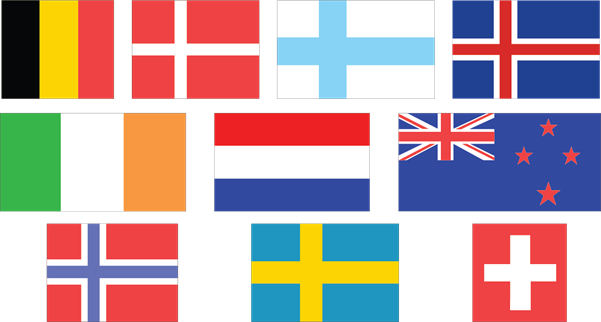
I envy the quality of democracy in Belgium, Denmark, Finland, Iceland, Ireland, the Netherlands, New Zealand, Norway, Sweden, and Switzerland. These countries, among others, use proportional representation (PR) to elect their national legislatures. PR ensures political parties win seats based on the percentage of votes they receive. This system encourages people to vote because they know their vote truly counts. In Canada, a dispiriting 50% votes elect no one; in Belgium, it’s less than 5%.

PR systems lead to higher voter turnout (especially among younger people), more diverse representation (in terms of age, gender, and occupation), and greater voter satisfaction. With more women in legislatures and a structure that encourages cooperation over competition, PR fosters collaboration. This leads to thoughtful, long-term legislation that builds voter trust. Greater trust, in turn, leads to increased civic engagement—a key indicator of a healthy democracy.

As the Saskatchewan election approaches, ask your candidates if they support electoral reform with PR. If they don’t, ask how they plan to improve civic engagement and the quality of our democracy. Share your conversations with facebook.com/FairVoteSask and learn more at FairVote.ca.

Friday, 24 May 2024

Mature Politics with Proportional Representation

Decades ago, one of my children visited Saskatchewan’s Legislative Assembly. Expecting to learn about governance and democracy, they were instead appalled by chaos and incivility. Elected officials, who were supposed to represent us with dignity, behaved like squabbling children.


Image by Dmitry Abramov from Pixabay

Recent sessions amplify the worst tantrums of past decades. MLA Ken Francis confessed he gets sucked into trash talk almost daily. Speaker Randy Weekes’ final speech alleged threats and harassment from fellow Saskatchewan Party MLAs. He also alleged Deputy Leader Jeremy Harrison brought a gun into the Assembly.

Premier Scott Moe’s response? Weekes is a “sorer loser” and Moe dismisses the alarming allegations against Harrison as false. No investigation necessary. He also categorizes the texts to Weekes as “ambitious” rather than “harassment.” Ambitious? To what purpose? Partisan purposes as the sender attempts to have the non-partisan speaker favour a side?

The first-past-the-post produced Assembly fosters an environment where yelling and intimidation mock dialogue and collaboration. Reform with proportional representation could address these issues. By ensuring that legislative seats more accurately reflect the diverse views of our population, evidence proves proportional representation encourages coalition-building and cooperation. Instead of a winner-takes-all approach that fuels partisanship, this system promotes a more inclusive and respectful political culture.

Proportional representation offers a path to a more mature and effective legislative process. To improve our democracy in provincial and federal elections, vote for candidates who will enact electoral reform with proportional representation. Learn more at FairVote.ca or facebook.com/FairVoteSask.

Friday, 29 December 2023

Escaping Our Groundhog Day Campaigning Loop

 Are you familiar with the movie Groundhog Day? Phil Connors, the main character, realizes that he is trapped in a time loop. It feels like Canadians are stuck in a political version of Groundhog Day with our first-past-the-post (FPTP) electoral system.

FPTP’s permanent campaign loop has become our political alarm clock, waking us up each day to the same hollow promises and slogans. This endless cycle interferes with effective governance. Our leaders are so busy perfecting their campaign smiles that they forget about the real issues – it's like they're stuck in a time loop, determined to look good to maintain or gain power.

How does permanent campaigning disrupt effective governance? It diverts those in power from long-term comprehensive inclusive policy planning to short-term narrow selfish electoral gains. It encourages politicians to prioritize image over substance, neglect complex issues, and fosters a polarized environment. Politicians direct resources towards winning elections rather than securing social justice and environmental stewardship.

The solution? Let's break free from this political Groundhog Day with electoral reform, specifically through proportional representation (PR). It would inject vital variety into our political landscape, ensure that diverse voices are heard, and prevent the same old script from playing on repeat. It's time to ditch the permanent campaign loop of FPTP. Let’s embrace the collaboration of PR that numerous democracies use to produce effective and visionary governance.

Support FairVote.caNationalCitizensAssembly.ca, and CharterChallenge.ca and ask your MP to vote for M-86 Citizens' Assembly on Electoral Reform.

By Nancy Carswell

Sunday, 17 December 2023

Our Shared Ecosystem Credit Card

 Are you familiar with layaway plans? Layaway plans are payment by installments and you take possession of the merchandise after you have paid in full. An advantage of layaway over buying on credit is you don’t pay interest. (Not paying interest is good because making only minimum payments, I would pay $38,000 in interest on my latest bill.)

Are fossil fuel-based industries on a layaway plan or are they using a credit card? While their extraction is payment by installments—infrastructure, equipment, and labour, they are charging gigantic sums on our shared ecosystem credit card.

Modified image by Alistair Whyte from Pixabay

Ecosystems are circular. Withdrawing elements like water unbalances the cycle. One example is the Alberta tar sands tailing ponds’ water. Recycling the 1.2 trillion litres of toxic water to rebalance the ecosystem will absorb 50% of the estimated $130 billion total clean up. Less than $2 billion has been secured from industry.

Government issues industry our shared ecosystem credit card. It sets environmental limits and charges interest. Sadly, our first-past-the-post electoral system does not support diversity. Our representatives are mostly wealthy lawyers and executives who prioritize the economy over the environment. Their wealth insulates against environmental devastation. To keep Earth habitable for humans, we need diverse representatives, some who comprehend we depend on balanced circular ecosystems and prioritize the environment over the economy. We need electoral reform with proportional representation (PR). Support FairVote.caNationalCitizensAssembly.ca, and/or CharterChallenge.ca. Also, mention to your elected representatives that countries that have evolved to PR get better environmental report cards.

Sunday, 5 November 2023

Cost of Keeping First-Past-the-Post Electoral System

Are you loath to upgrade to a new cell phone? I was and I regret it. My new cell has upgraded my life. This may sound exaggerated but it is not. My new cell’s space allows for audiobook downloads. Listening to them turns joyless boring chores into joyful interesting experiences. Its software supports a fitness app and its feedback inspires more steps and more sleep.


Image by Bruno from Pixabay

It is impossible to calculate the cost of keeping my old cell. What is possible to calculate is the years Canadians have been cheated out of an upgraded democracy. Before 1921, Canadian elections were between two parties. The 1921 election had three. This made our majoritarian electoral system of first-past-the-post (FPTP) undemocratic. Winning a seat no longer required a majority of votes. As the number of parties increased, our democracy decreased. In the 2021 federal election, the Conservatives won more votes but with FPTP the Liberals won 160 seats to the Conservatives 119. The Bloc won 32 seats with 8% of the vote compared to the NDP’s 25 seats with 18% of the vote. Not upgrading our democracy has cost us over a hundred years of distorted election results.

Since 1921, commissions, reports, politicians, and citizens have consistently and repeatedly recommended electoral reform with proportional representation (PR). Parties have promised it (and reneged after getting 100% of the power with FPTP). Other countries using FPTP have upgraded their democracy with PR. It is time we did the same. Support FairVote.ca, NationalCitizensAssembly.ca, and/or CharterChallenge.ca.

Sunday, 15 April 2018

Guaranteed Annual Income and Obesity

When I indulge in an Egg McMuffin, I toss half the muffin. In my case, it is better wasted than waisted. What about a student from a food insecure family? They eat to stop the pain of hunger. If hunger remains, they will be consumed by thoughts of food and unable to focus on schoolwork.

In one decade, the price of whole food rose by 40%. The price of processed food? It dropped by 40%.

From A Place at the Table (2012)

Big Food’s mantra is processed food is fine if you have a balanced diet. The 2016 Senate “Obesity in Canada” report states, “low-income Canadians are often restricted to the foods that are available and that they can best afford, which are generally speaking, the least healthy.”

To stop hunger, parents stretch food dollars. Oodles of noodles, hollow cereals, and fibreless juices is an unbalanced diet. In urban food deserts and remote communities, whole food is beyond stretch and/or unavailable.

Processed food is calorie-rich and nutrient-poor making us and our children overweight and ironically, undernourished. Whole food is calorie-poor and nutrient-rich plus it has elements that tell our brain to stop eating.

Would guaranteed annual income (GAI) increase the amount of whole foods low-income families could buy? Especially for expectant mothers who set baby’s taste buds? If you would like to find out, take action. Contact your government representatives. Ask about GAI in leadership races and elections. Most importantly, promote the idea around your kitchen table with children, family, friends, and neighbours.

Sunday, 18 March 2018

Guaranteed Annual Income and School Readiness

In Robert Munsch’s Murmel, Murmel, Murmel, Robin finds a baby in her sandbox. Declaring she is too young to take care of a baby, she searches for an adult. Her skills, knowledge, and attitude prove five-year-old Robin is school ready.


School readiness is different from academic readiness. To succeed academically (and in life), children need self-regulation, executive functions, and social-emotional skills. These abilities are wired in by parental attention. In Canada, one out of four children fail school readiness tests. (The failure rate is higher for Indigenous children—another criminal legacy of the residential school system.)

Imagine Robin found parents stressed by poverty. Our baby is less likely to develop school readiness. Economist Ha-Joon Chang recognizes children need more than “minimum nutrition and parental attention.” Dr. Gabor Maté appreciates “the parent’s brain programs the infant’s, and this is why stressed parents will often rear children whose stress apparatus also runs in high gear, no matter how much they love their child and no matter that they strive to do their best.”

Maté proves every baby needs parenting from a “reliably available, protective, psychologically present and reasonably non-stressed adult.” Would guaranteed annual income (GAI) increase the likelihood that parents would be non-stressed and better able to wire in school readiness? If you would like to find out, take action. Contact your government representatives. Ask about GAI in leadership races and elections. Most importantly, promote the idea around your kitchen table with children, family, friends, and neighbours.

Wednesday, 28 February 2018

Guarantee Annual Income and Parenting Altruism

"Negative income" is an oxymoron—a phrase that combines contradictory ideas. Does "philanthropic millionaire" qualify as an oxymoron? Author John Steinbeck thought so. He wrote, "One has only to remember some of our wolfish financiers who spend two-thirds of their lives clawing fortunes out of the guts of society and the latter third pushing it back." He then added "giving can bring the same sense of superiority as getting does, and philanthropy may be another kind of spiritual avarice."

While millionaire and billionaire philanthropists may feel a sense of superiority, researchers have found giving, or altruism, is hard-wired into the brain and produces a sense of belonging. A sense of belonging is a universal human need.

We have crushing proof that tax loopholes, limited liability, financial (de)regulations, outsourcing, and automation are powerful claws.  They are gutting the 99% of us and the environment.

The Latin origins of “parent” means “bringing forth.” We need to parent the idea that we can skip the wolfishly clawing of fortunes and go straight to altruism. By cultivating empathy in ourselves, others, and especially our children, we can declaw wolfish corporations and individuals.

Would guaranteed annual income (GAI) reduce the need for philanthropic zillionaires? If you would like to find out, take action. Contact your government representatives. Ask about GAI in leadership races and elections. Most importantly, promote the idea around your kitchen table with children, family, friends, and neighbours.

Tuesday, 13 June 2017

STC U-Turn


I stood witness to the last Saskatchewan Transportation Company (STC) bus leaving the Prince Albert depot on May 31, 2017. It was bittersweet.  Sweet because I have private transportation and could stand in solidarity with the employees.  Bitter because people without public transportation are at increased health and safety risks.

Final bus from Prince Albert depot 31-Jun-2017.

How many people are now experiencing distress around getting to their next medical appointment? How many people are now risking their lives by hitching rides? It may be coincidence, but in the first week of June, I counted seven hitchhikers at intersections on highways north of Prince Albert where I normally see one or two.

The bitter has turned to blister.  I learned that the provincial government did not ask for Saskatchewan's share of federal transit funding.  It was reported to be $640 million—7.5 times the funding estimated for 5 years of STC operation.

The STC is a public transportation system cost-shared with riders.  John Thornton's investigation showed the government was headed down the right road early in its mandate. It increased ridership by lowering fares.  Then my university daughter found the STC an affordable ride home on weekends for family celebrations.  Now it is pricey.

Our government courageously admitted its mistake with the cuts to libraries.  It recognized the cuts reduced our quality of life.  Eliminating our STC may reduce the quantity of life at risk for our most vulnerable riders.  Let's tell our government to courageously slam on the brakes and pull a U-turn before we lose our wheels.

Nancy Carswell
Shellbrook, Saskatchewan