Saturday, 22 February 2025

Rising Billionaires and Receding Democracy

 Have you lived a billion seconds? Hint: You’ve lived a million seconds if you are 12 days old. If you’ve lived a billion seconds, you are almost 32.

Now, imagine if dollars were seconds and your lifetime earnings were $2.2 million. How many days is that? About 26 days. But billionaires? They’ve got 32 years' worth of dollars to burn. They only need to spend 12 days' worth to flood election campaigns with donations, channel lobbyists into key positions, and submerge politicians in a tide of influence. With just a 0.00094 of their fortune, they shape policies, cut themselves tax breaks, and rig the system in their favor.

Under first-past-the-post (FPTP), winning isn’t about representing the most people; it’s about gaming the system. A party can win total control with just 39% of the vote, leaving the majority without a voice. And who benefits? The ultra-rich.


Modified mage by Alex Yomare from Pixabay

Proportional representation (PR) is a remedy. PR ensures seats match votes, making it harder for wealthy donors to buy governments. More diverse voices in the legislature mean fewer policies to benefit the wealthy and more policies that serve people and the planet.

If you’re tired of a democracy that prioritizes profit over people and our planet, support PR. It’s time to reclaim our democracy for everyone. With electoral reform through PR, we can take the next step—transforming our economy from a linear system of extraction and exploitation to a circular one centered on sustainability and justice. Visit FairVote.ca and/or CharterChallenge.ca.

Thursday, 12 September 2024

Quality of Democracy Envy

 Do you distinguish between jealousy and envy? I do. Jealousy is wanting something someone else has and not wanting them to have it. Envy, on the other hand, is wanting something someone else has while being fine with them having it too.


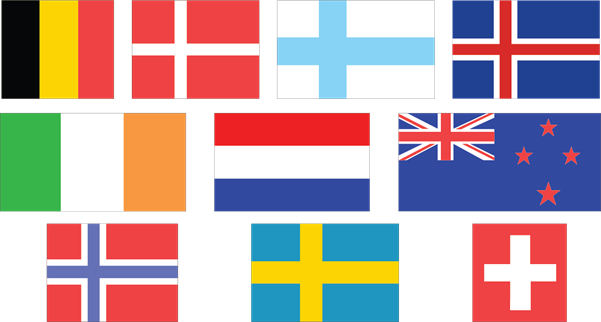
I envy the quality of democracy in Belgium, Denmark, Finland, Iceland, Ireland, the Netherlands, New Zealand, Norway, Sweden, and Switzerland. These countries, among others, use proportional representation (PR) to elect their national legislatures. PR ensures political parties win seats based on the percentage of votes they receive. This system encourages people to vote because they know their vote truly counts. In Canada, a dispiriting 50% votes elect no one; in Belgium, it’s less than 5%.

PR systems lead to higher voter turnout (especially among younger people), more diverse representation (in terms of age, gender, and occupation), and greater voter satisfaction. With more women in legislatures and a structure that encourages cooperation over competition, PR fosters collaboration. This leads to thoughtful, long-term legislation that builds voter trust. Greater trust, in turn, leads to increased civic engagement—a key indicator of a healthy democracy.

As the Saskatchewan election approaches, ask your candidates if they support electoral reform with PR. If they don’t, ask how they plan to improve civic engagement and the quality of our democracy. Share your conversations with facebook.com/FairVoteSask and learn more at FairVote.ca.

Friday, 24 May 2024

Mature Politics with Proportional Representation

Decades ago, one of my children visited Saskatchewan’s Legislative Assembly. Expecting to learn about governance and democracy, they were instead appalled by chaos and incivility. Elected officials, who were supposed to represent us with dignity, behaved like squabbling children.


Image by Dmitry Abramov from Pixabay

Recent sessions amplify the worst tantrums of past decades. MLA Ken Francis confessed he gets sucked into trash talk almost daily. Speaker Randy Weekes’ final speech alleged threats and harassment from fellow Saskatchewan Party MLAs. He also alleged Deputy Leader Jeremy Harrison brought a gun into the Assembly.

Premier Scott Moe’s response? Weekes is a “sorer loser” and Moe dismisses the alarming allegations against Harrison as false. No investigation necessary. He also categorizes the texts to Weekes as “ambitious” rather than “harassment.” Ambitious? To what purpose? Partisan purposes as the sender attempts to have the non-partisan speaker favour a side?

The first-past-the-post produced Assembly fosters an environment where yelling and intimidation mock dialogue and collaboration. Reform with proportional representation could address these issues. By ensuring that legislative seats more accurately reflect the diverse views of our population, evidence proves proportional representation encourages coalition-building and cooperation. Instead of a winner-takes-all approach that fuels partisanship, this system promotes a more inclusive and respectful political culture.

Proportional representation offers a path to a more mature and effective legislative process. To improve our democracy in provincial and federal elections, vote for candidates who will enact electoral reform with proportional representation. Learn more at FairVote.ca or facebook.com/FairVoteSask.

Friday, 29 December 2023

Escaping Our Groundhog Day Campaigning Loop

 Are you familiar with the movie Groundhog Day? Phil Connors, the main character, realizes that he is trapped in a time loop. It feels like Canadians are stuck in a political version of Groundhog Day with our first-past-the-post (FPTP) electoral system.

FPTP’s permanent campaign loop has become our political alarm clock, waking us up each day to the same hollow promises and slogans. This endless cycle interferes with effective governance. Our leaders are so busy perfecting their campaign smiles that they forget about the real issues – it's like they're stuck in a time loop, determined to look good to maintain or gain power.

How does permanent campaigning disrupt effective governance? It diverts those in power from long-term comprehensive inclusive policy planning to short-term narrow selfish electoral gains. It encourages politicians to prioritize image over substance, neglect complex issues, and fosters a polarized environment. Politicians direct resources towards winning elections rather than securing social justice and environmental stewardship.

The solution? Let's break free from this political Groundhog Day with electoral reform, specifically through proportional representation (PR). It would inject vital variety into our political landscape, ensure that diverse voices are heard, and prevent the same old script from playing on repeat. It's time to ditch the permanent campaign loop of FPTP. Let’s embrace the collaboration of PR that numerous democracies use to produce effective and visionary governance.

Support FairVote.caNationalCitizensAssembly.ca, and CharterChallenge.ca and ask your MP to vote for M-86 Citizens' Assembly on Electoral Reform.

By Nancy Carswell

Sunday, 17 December 2023

Our Shared Ecosystem Credit Card

 Are you familiar with layaway plans? Layaway plans are payment by installments and you take possession of the merchandise after you have paid in full. An advantage of layaway over buying on credit is you don’t pay interest. (Not paying interest is good because making only minimum payments, I would pay $38,000 in interest on my latest bill.)

Are fossil fuel-based industries on a layaway plan or are they using a credit card? While their extraction is payment by installments—infrastructure, equipment, and labour, they are charging gigantic sums on our shared ecosystem credit card.

Modified image by Alistair Whyte from Pixabay

Ecosystems are circular. Withdrawing elements like water unbalances the cycle. One example is the Alberta tar sands tailing ponds’ water. Recycling the 1.2 trillion litres of toxic water to rebalance the ecosystem will absorb 50% of the estimated $130 billion total clean up. Less than $2 billion has been secured from industry.

Government issues industry our shared ecosystem credit card. It sets environmental limits and charges interest. Sadly, our first-past-the-post electoral system does not support diversity. Our representatives are mostly wealthy lawyers and executives who prioritize the economy over the environment. Their wealth insulates against environmental devastation. To keep Earth habitable for humans, we need diverse representatives, some who comprehend we depend on balanced circular ecosystems and prioritize the environment over the economy. We need electoral reform with proportional representation (PR). Support FairVote.caNationalCitizensAssembly.ca, and/or CharterChallenge.ca. Also, mention to your elected representatives that countries that have evolved to PR get better environmental report cards.

Sunday, 5 November 2023

Cost of Keeping First-Past-the-Post Electoral System

Are you loath to upgrade to a new cell phone? I was and I regret it. My new cell has upgraded my life. This may sound exaggerated but it is not. My new cell’s space allows for audiobook downloads. Listening to them turns joyless boring chores into joyful interesting experiences. Its software supports a fitness app and its feedback inspires more steps and more sleep.


Image by Bruno from Pixabay

It is impossible to calculate the cost of keeping my old cell. What is possible to calculate is the years Canadians have been cheated out of an upgraded democracy. Before 1921, Canadian elections were between two parties. The 1921 election had three. This made our majoritarian electoral system of first-past-the-post (FPTP) undemocratic. Winning a seat no longer required a majority of votes. As the number of parties increased, our democracy decreased. In the 2021 federal election, the Conservatives won more votes but with FPTP the Liberals won 160 seats to the Conservatives 119. The Bloc won 32 seats with 8% of the vote compared to the NDP’s 25 seats with 18% of the vote. Not upgrading our democracy has cost us over a hundred years of distorted election results.

Since 1921, commissions, reports, politicians, and citizens have consistently and repeatedly recommended electoral reform with proportional representation (PR). Parties have promised it (and reneged after getting 100% of the power with FPTP). Other countries using FPTP have upgraded their democracy with PR. It is time we did the same. Support FairVote.ca, NationalCitizensAssembly.ca, and/or CharterChallenge.ca.

Sunday, 15 April 2018

Guaranteed Annual Income and Obesity

When I indulge in an Egg McMuffin, I toss half the muffin. In my case, it is better wasted than waisted. What about a student from a food insecure family? They eat to stop the pain of hunger. If hunger remains, they will be consumed by thoughts of food and unable to focus on schoolwork.

In one decade, the price of whole food rose by 40%. The price of processed food? It dropped by 40%.

From A Place at the Table (2012)

Big Food’s mantra is processed food is fine if you have a balanced diet. The 2016 Senate “Obesity in Canada” report states, “low-income Canadians are often restricted to the foods that are available and that they can best afford, which are generally speaking, the least healthy.”

To stop hunger, parents stretch food dollars. Oodles of noodles, hollow cereals, and fibreless juices is an unbalanced diet. In urban food deserts and remote communities, whole food is beyond stretch and/or unavailable.

Processed food is calorie-rich and nutrient-poor making us and our children overweight and ironically, undernourished. Whole food is calorie-poor and nutrient-rich plus it has elements that tell our brain to stop eating.

Would guaranteed annual income (GAI) increase the amount of whole foods low-income families could buy? Especially for expectant mothers who set baby’s taste buds? If you would like to find out, take action. Contact your government representatives. Ask about GAI in leadership races and elections. Most importantly, promote the idea around your kitchen table with children, family, friends, and neighbours.